Account Login
  Start/Stop Service
  Pay Bill
  Outages
  Contact Us
MENU
MENU

When you flip a switch, you’re tapping into a complex system designed to deliver on command. But did you know your usage impacts more than just your monthly bill? It impacts the entire electric grid.
Think of it this way: You wouldn’t build a highway sized for midnight traffic or design an airport for its lightest travel day. Similarly, we must build and maintain an electric grid capable of meeting the highest level of electricity our members demand at any given moment, even if those peaks in electricity demand happen only briefly.
Here’s another way to think about energy versus demand:
If your home needs a lot of water at once, the pipes must be bigger, and often more expensive. The same goes for electricity.
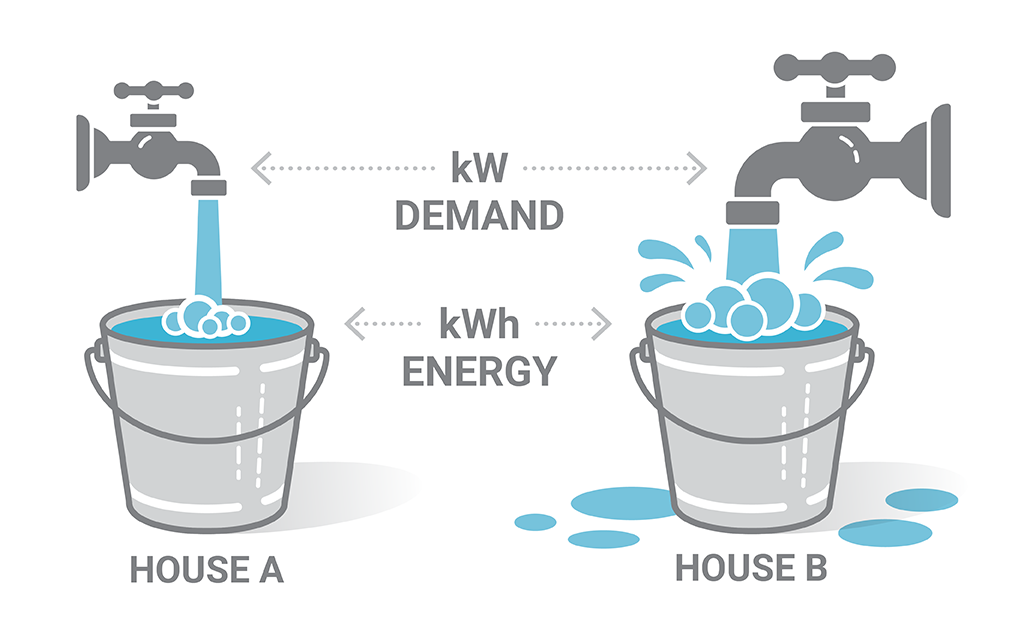
Running multiple large appliances at the same time, like your oven and dryer, creates a higher demand. That means more strain on the grid and more equipment to meet that demand.
Oven + Dryer at once = 8kW demand.

Oven, then Dryer later = 4kW demand.

Consistency is key. Avoid stacking the use of big appliances all at the same time. Instead, try spreading out usage to lower your peak demand.
Your monthly bill states the exact time and date of your highest peak demand. Think about how you’re using electricity in that moment to spread your usage and reduce the demand charge.
Learn more about managing demand to save energy here.
 Account Login
  Start/Stop Service
  Pay Bill
  Outages
  Contact Us